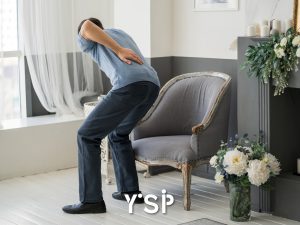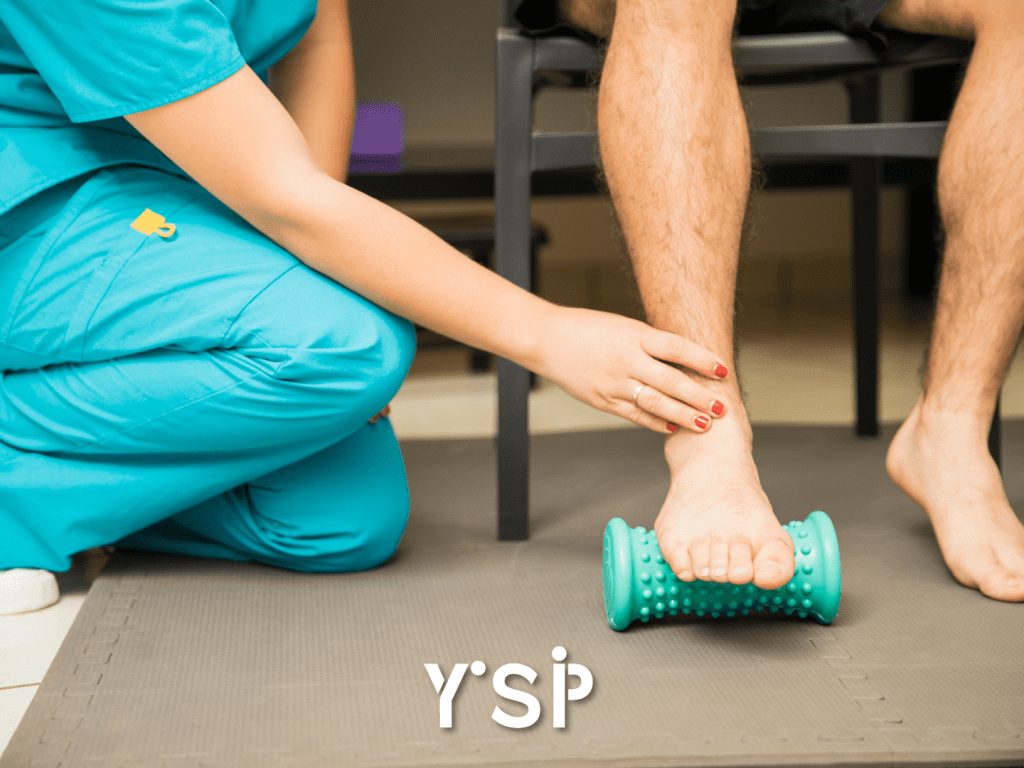
That first step out of bed is the tell. Your heel hits the floor and it feels like stepping on a nail. You limp to the bathroom, it eases off after a few minutes, and you tell yourself it’s manageable. Then you spend eight hours on concrete, and by knock-off time, it’s throbbing again.
If you’ve already tried pharmacy insoles and you’re still limping through your shifts, the problem isn’t your footwear. It’s what’s driving the load into your heel. Plantar fasciitis treatment that only targets the heel rarely holds, because the heel is where you feel it, not where the problem starts.
The Real Reason Plantar Fasciitis Keeps Coming Back
Most treatments address the pain. Very few address why the plantar fascia is getting overloaded in the first place.
The plantar fascia is a thick band of connective tissue that runs along the sole of your foot. It absorbs shock and supports your arch with every step. When it’s repeatedly overloaded without enough recovery time, it develops micro-tears at the heel attachment, and that spot becomes inflamed, painful, and sensitive first thing in the morning.
The pharmacy insole offloads some pressure for a while. Strapping your mate showed you helps for a shift or two. Rest over the weekend gives it a chance to settle. But once you’re back on the tools, the same load goes through the same spot, and the same cycle restarts.
For most tradies and warehouse workers, the real issue is a combination of factors working together: tight or weak calf muscles that can’t absorb load properly, reduced ankle mobility that forces the foot to compensate, and the cumulative strain of eight-plus hours a day on hard concrete with minimal task rotation. When your ankle can’t move freely through its range, the plantar fascia takes up the slack on every single step. Add fatigue toward the end of a shift, and that load multiplies.
This is why treating just the heel falls short. It’s managing a symptom of a mechanical problem that hasn’t been resolved.
What a Proper Plantar Fasciitis Assessment Actually Looks For
The diagnosis is usually straightforward. What matters is finding out which factors are driving it in your specific case.
A thorough assessment goes well beyond confirming you have plantar fasciitis. It looks at ankle dorsiflexion (how far your ankle can flex before your heel lifts), which directly affects how the plantar fascia is loaded during walking and squatting. It tests calf strength and endurance, particularly the soleus, the deeper calf muscle that runs from below the knee to the heel. When the soleus fatigues, that load transfers straight to the plantar fascia.
Your physio will also look at how you move under load, assess foot arch mechanics, and factor in the demands of your job. Standing static on concrete for a long shift is a very different load profile to office work or recreational sport, and the treatment plan needs to reflect that reality.
The assessment is what separates a useful rehab plan from a generic set of stretches.
Hands-On Treatment for Short-Term Pain Relief
Getting the pain down in the early stages is the priority. It’s hard to rehabilitate anything when every step is a grind.
Manual therapy forms the foundation of early-stage plantar fasciitis treatment. This includes soft tissue work to the calf complex and the plantar fascia itself, joint mobilisation to address ankle stiffness, and dry needling where muscular tension in the lower leg is contributing to the problem.
Taping provides useful short-term support during work shifts. It offloads the fascia enough to get through the day with less pain, and keeps you moving rather than resting, which matters more than most people realise for how connective tissue heals.
The hands-on work is the starting point, not the full solution. If pain management is all that happens, it’s only a matter of time before the symptoms return. The rehab that comes after is what changes the outcome.
Calf and Foot Strengthening: The Rehab That Actually Fixes Plantar Fasciitis
The research on plantar fasciitis consistently points to one finding: progressive loading of the calf and plantar fascia is the most effective long-term treatment.
The plantar fascia responds and adapts to load. That sounds counterintuitive when you’re in pain, but it’s how connective tissue recovers, not through rest, but through controlled, graded loading that gradually builds its capacity.
The core exercises in a physio rehab program are the eccentric calf raise (loading on the lowering phase, performed off a step) and the soleus raise, done with a bent knee to specifically target the deeper muscle. These build the capacity of the structures that are supposed to absorb ground reaction force, so the plantar fascia isn’t carrying that load alone.
In a gym-based progression, this moves from bodyweight to added load over time. For tradies who are already physically strong, the load can progress faster than you might expect. The critical variable isn’t how heavy you go, it’s doing it consistently, with correct tempo and enough volume.
Intrinsic foot strengthening, exercises for the small muscles that support the arch from within, rounds out the program. When these muscles aren’t contributing, the fascia compensates, and the cycle continues. This is the component that most brief treatments skip, and it’s also the reason sports injury rehab for recurring foot conditions takes a different approach to managing a one-off injury.
Managing Load Through Your Work Day
Physio rehab only works if the load that caused the injury is also addressed.
For someone on their feet all day, load management is as important as anything done in the clinic. Practically, that means looking at task rotation, whether there are points in the shift where you can take weight off the foot, even briefly. It means reviewing footwear, because a worn-out midsole loses its shock absorption long before the upper looks damaged. If your boots are over a year old and you’re covering serious ground daily, they may no longer be doing what they should.
If plantar fasciitis develops as a result of work conditions, prolonged standing on concrete for instance, it can be claimable under WorkCover. Your physio can support this with documentation and communication with your case manager where needed.
When Recovery Takes Longer Than Expected
Some presentations take longer to resolve, and it helps to know why.
If ankle stiffness is significant, it may need dedicated joint work before strength exercises become effective. Heel fat pad syndrome, where the natural cushioning under the heel has thinned over time, can present similarly to plantar fasciitis but requires a different approach. In cases that aren’t responding after several months of appropriate treatment, ultrasound imaging can help confirm the diagnosis and rule out a partial tear.
Plantar fasciitis rarely requires surgery. But if pain isn’t improving with consistent, correctly prescribed rehab, it’s worth reviewing what’s been tried and whether the underlying drivers have actually been addressed.
Plantar Fasciitis Treatment: Your Questions Answered
| Question | Answer |
|---|---|
| What is the most effective plantar fasciitis treatment? | The most effective plantar fasciitis treatment combines hands-on physiotherapy for pain relief with progressive calf and foot strengthening to address the underlying cause. Eccentric calf raises, ankle mobility work, and targeted load management are the core components of evidence-based rehab. |
| Why does plantar fasciitis keep coming back? | Plantar fasciitis returns when only the heel pain is treated rather than the cause. For tradies and warehouse workers, the most common drivers are tight or weak calf muscles, reduced ankle mobility, and cumulative load from standing on hard surfaces. Insoles and rest manage symptoms without fixing these underlying factors. |
| How long does physio for plantar fasciitis take? | Most people notice meaningful improvement within 8 to 12 weeks of consistent physio rehab. Addressing the cause, particularly calf strength and ankle stiffness, alongside managing load at work tends to produce better outcomes than pain management alone. |
| Can plantar fasciitis be claimed under WorkCover? | If plantar fasciitis develops or worsens due to occupational factors such as prolonged standing on concrete, it may be claimable under WorkCover. A physiotherapist can assess the injury, document the work-related nature of the condition, and liaise with your case manager. |
| What exercises help plantar fasciitis? | Eccentric calf raises performed on a step and soleus raises done with a bent knee are the most evidence-supported exercises for plantar fasciitis. Foot intrinsic strengthening exercises, which target the small muscles supporting the arch, are also an important part of a complete rehab program. |
| Should I rest or keep moving with plantar fasciitis? | Complete rest is rarely effective for plantar fasciitis and can delay recovery. Staying active with modified load, using taping for support during work shifts, and beginning a graded strengthening program is generally more effective. A physiotherapist can help you manage activity without aggravating the injury. |
Final Thoughts
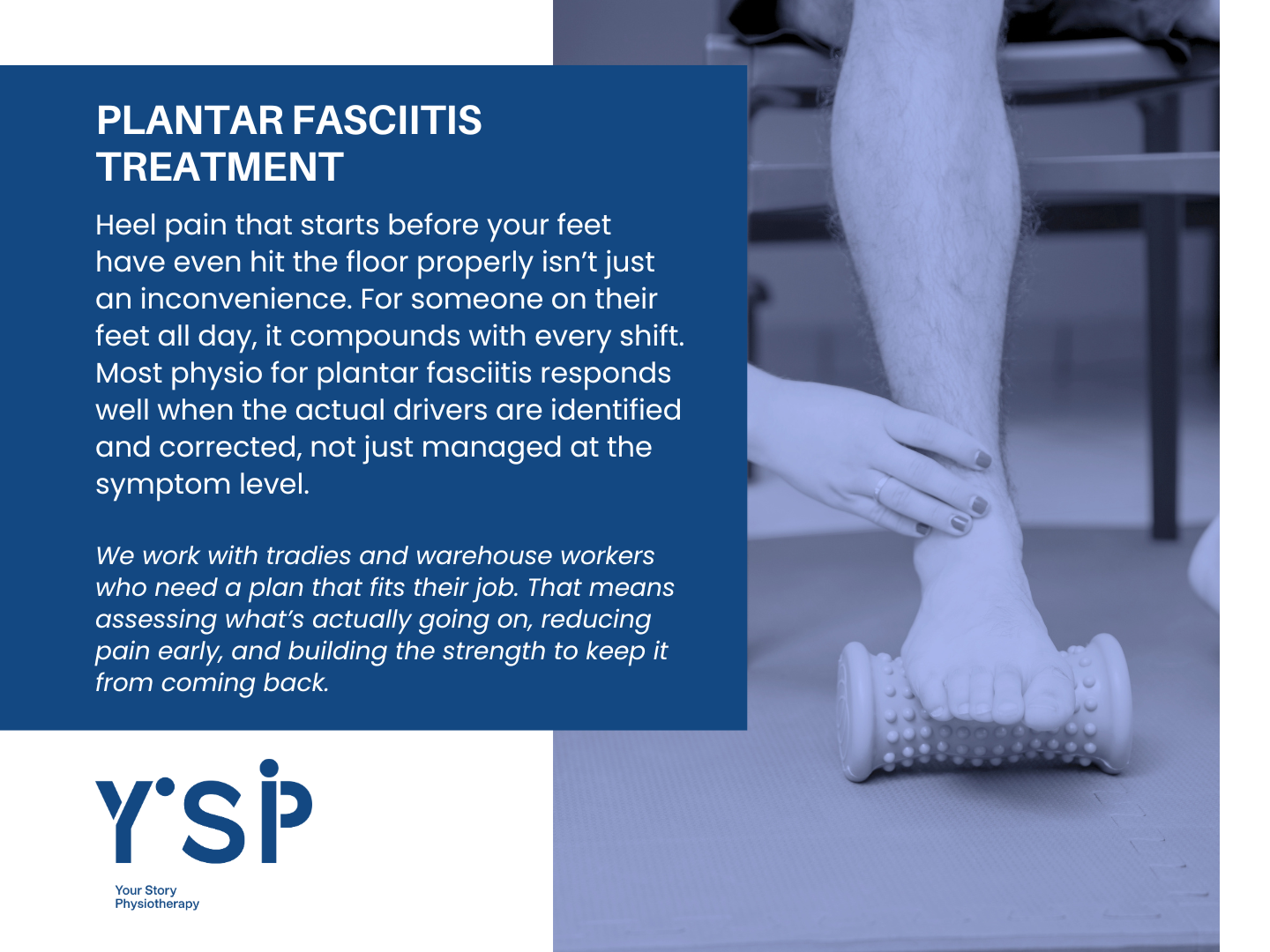
Heel pain that starts before your feet have even hit the floor properly isn’t just an inconvenience. For someone on their feet all day, it compounds with every shift. Most physio for plantar fasciitis responds well when the actual drivers are identified and corrected, not just managed at the symptom level.
At Your Story Physiotherapy in Sunshine, we work with tradies and warehouse workers who need a plan that fits their job, not a generic protocol. That means assessing what’s actually going on, reducing pain early, and building the strength to keep it from coming back.
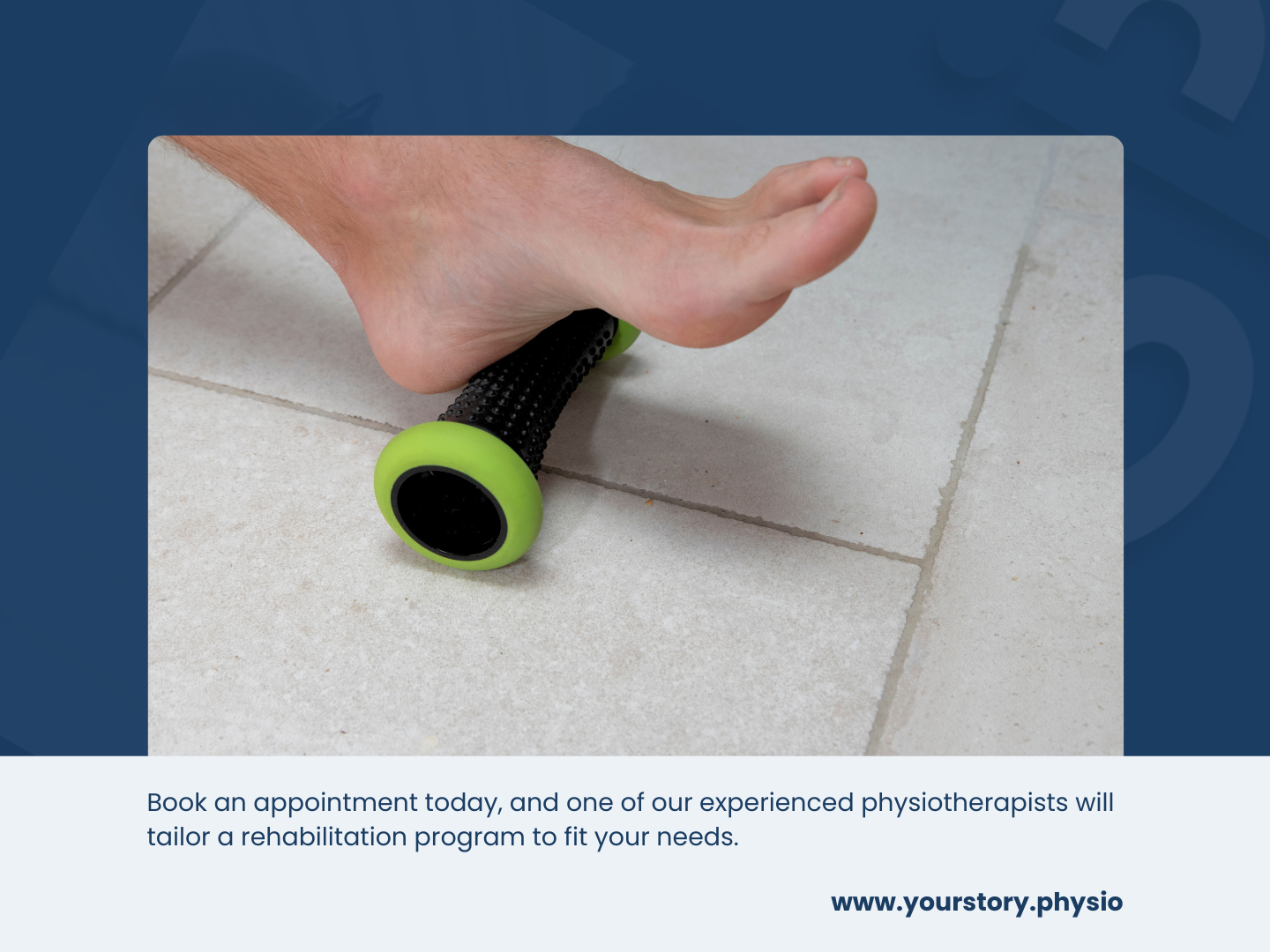
Book a plantar fasciitis assessment at Your Story Physio, and find out what’s driving your heel pain.