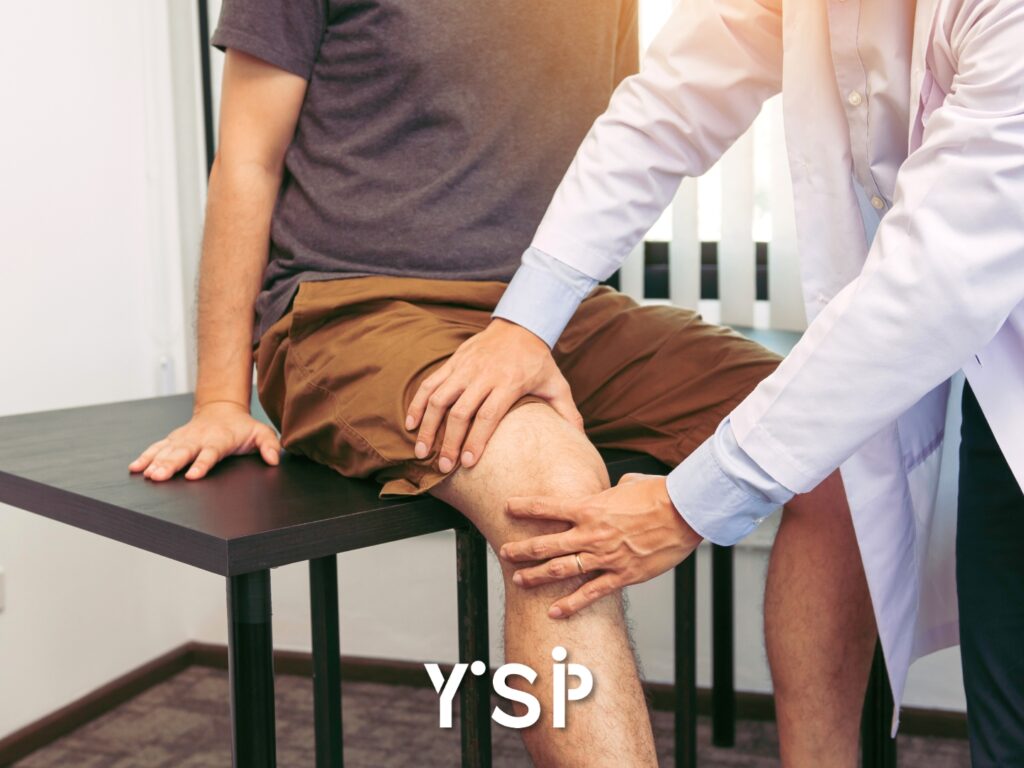
Have you recently found yourself sidelined by a torn meniscus after a car accident? Are you wondering how to get back on your feet and reclaim your active lifestyle? The journey to recovery can feel overwhelming, but it doesn’t have to be.
Car accidents can lead to a variety of injuries, and damage to the meniscus—a crucial cartilage in the knee—can pose significant challenges. Whether it’s the intense pain, limited mobility, or the fear of long-term complications, navigating the path to recovery is often a daunting experience. As you grapple with these physical and emotional hurdles, understanding the healing process is vital.
Physiotherapy plays a pivotal role in the rehabilitation of a torn meniscus, helping restore strength, flexibility, and function. However, regaining your pre-injury condition requires more than just attendance at therapy sessions; it demands a commitment to an informed and effective rehab plan tailored to your needs.
What is a torn meniscus?
A torn meniscus is a common knee injury that occurs when the cartilage in the knee joint tears. The meniscus is a C-shaped piece of cartilage that acts as a shock absorber between the femur (thighbone) and the tibia (shinbone). When the meniscus tears, it can cause pain, swelling, and difficulty walking.
There are two types of meniscus: the medial meniscus and the lateral meniscus. The medial meniscus is more likely to tear because it is more susceptible to injury.
A torn meniscus can be caused by a variety of activities, including sports, car accidents, and everyday activities.
Common symptoms of a torn meniscus
- Pain in the knee, especially when squatting, kneeling, or twisting.
- Swelling in the knee.
- Locking of the knee means that the knee feels stuck and cannot be fully extended.
- Popping or clicking in the knee.
- Difficulty walking.
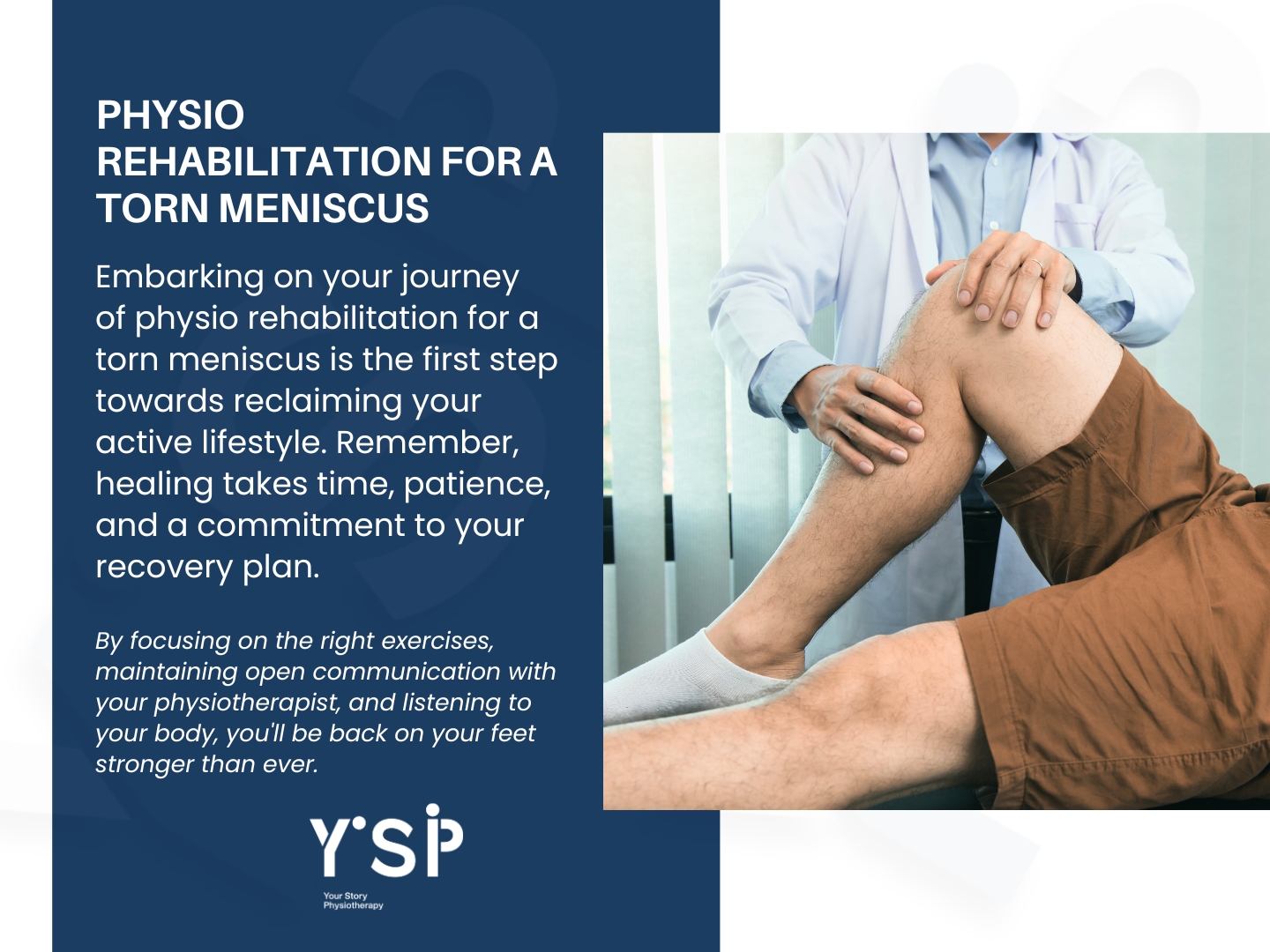
Physiotherapy rehabilitation for a torn meniscus
A torn meniscus is a common injury, especially among athletes and individuals involved in car accidents. It can be a painful condition that can significantly impact your mobility. Physiotherapy plays a crucial role in recovery by helping to:
- Reduce pain: Physiotherapists can use techniques like massage and dry needling to alleviate pain and discomfort.
- Improve range of motion: Exercises and stretches can help restore the full range of motion in your knee.
- Strengthen muscles: Building stronger muscles around the knee can provide support and stability.
- Improve function: Physiotherapy can help you regain normal activities and prevent future injuries.
Common physiotherapy techniques for a torn meniscus
1. Strength exercises
- Quadriceps strengthening: Exercises like leg extensions and squats can help strengthen the muscles in the front of your thigh.
- Hamstring strengthening: Exercises like leg curls and bridges can help strengthen the muscles in the back of your thigh.
- Calf strengthening: Calf raises can help improve the strength and flexibility of your calf muscles.
2. Stretching exercises
- Hamstring stretches: Lying down and reaching for your toes or standing hamstring stretches can help improve flexibility.
- Quadriceps stretches: Holding your ankle behind you and gently pulling it towards your buttocks can stretch your quadriceps.
3. Proprioception exercises
- Proprioception is your body’s sense of where it is in space. Strengthening this sense can help improve balance, stability, and coordination, all of which are important for recovering from a torn meniscus.
4. Manual therapy
- Mobilisation: Physiotherapists can use manual techniques to improve joint mobility and reduce pain.
- Soft tissue release: Techniques like massage and myofascial release can help reduce muscle tension and improve blood flow.
5. Modalities
- Heat therapy: Applying heat can help reduce pain and improve blood flow.
- Ice therapy: Applying ice can help reduce swelling and inflammation.
- Dry needling: This technique can help reduce pain and improve muscle function.
The specific physiotherapy treatment plan will vary depending on the severity of your injury and your individual needs. It’s essential to consult with a qualified physiotherapist to develop a personalised treatment plan.
How long does it take for a torn meniscus to heal with physiotherapy?
The healing time for a torn meniscus with physiotherapy can vary depending on the severity of the tear, the individual’s overall health, and the effectiveness of the treatment.
Generally, it can take anywhere from 6–8 weeks to several months for a torn meniscus to heal with physiotherapy.
Here are some factors that can affect the healing time:
- The severity of the tear: A partial tear may heal faster than a complete tear.
- Location of the tear: Tears in certain areas of the meniscus where there is less blood flow may heal more slowly.
- Individual factors: Age, overall health, and adherence to the physiotherapy rehabilitation program can all influence healing time.
Final thoughts
Embarking on your journey of physio rehabilitation for a torn meniscus is the first step towards reclaiming your active lifestyle. Remember, healing takes time, patience, and a commitment to your recovery plan.
By focusing on the right exercises, maintaining open communication with your physiotherapist, and listening to your body, you’ll be back on your feet stronger than ever. So lace up those sneakers and get ready—your comeback story is just beginning!
Book an appointment today, and one of our experienced physiotherapists will tailor a rehabilitation program to fit your needs.