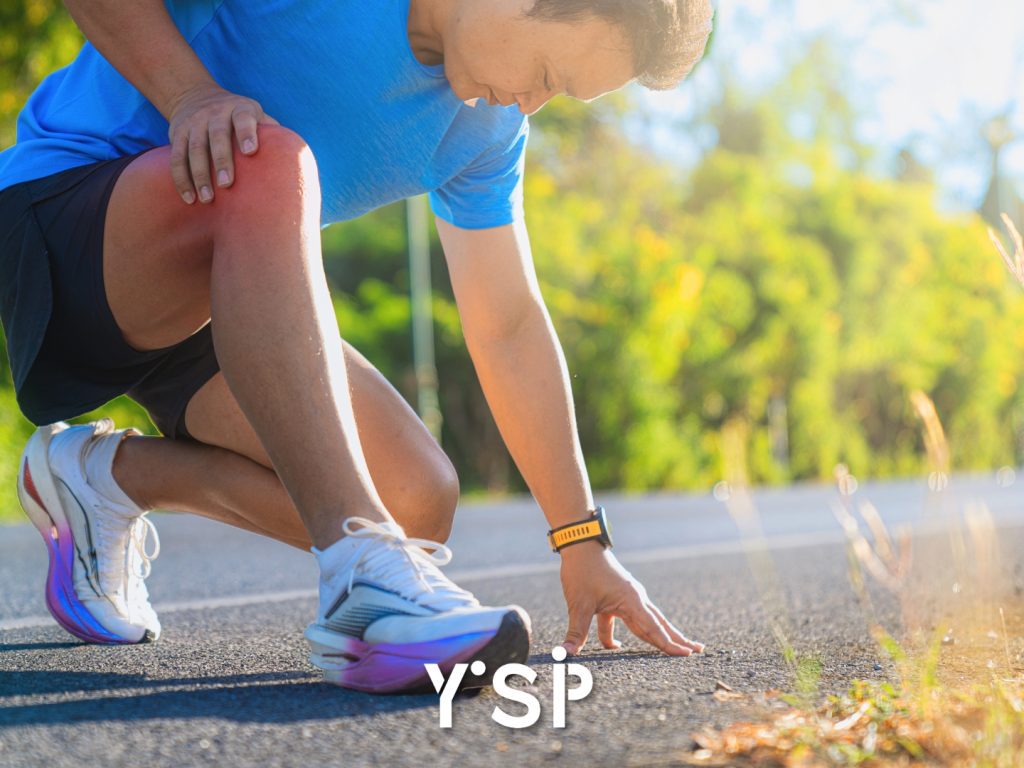
A knee injury changes things fast. One landing, one twist, one awkward movement at the end of a long shift. Suddenly you’re on the sideline or knocked off the job. Knees carry a lot of load in everyday life, and when something gives way, the path back can feel unclear.
Knee injury physiotherapy at Your Story Physiotherapy covers three of the most common presentations: ACL, MCL, and meniscus injuries. Each is different in how it happens, how it feels, and how recovery unfolds. What they share: with the right plan, most people return to their sport, their trade, or their daily job without constant fear of it happening again.
Understanding the Three Main Knee Injuries
ACL, MCL, meniscus: three structures, three different challenges
The ACL (anterior cruciate ligament) runs through the centre of the knee and controls rotational stability. It’s commonly injured in sports involving sudden direction changes (AFL, soccer, basketball, netball) as well as during falls and heavy lifting on worksites. A partial or complete ACL tear often comes with a sharp pop, immediate swelling, and a feeling that the knee can’t be trusted.
The MCL (medial collateral ligament) sits on the inner side of the knee and resists sideways forces. Contact injuries, twisting incidents, and awkward landings are common causes. Unlike ACL injuries, most MCL tears don’t require surgery. They respond well to physiotherapy and graded loading over a matter of weeks.
The meniscus is a C-shaped piece of cartilage that cushions the joint and distributes weight across it. Acute tears happen in sport, but meniscus injuries are also common in people who squat, kneel, or work in cramped positions over many years. Symptoms typically include pain along the joint line, stiffness, and sometimes a locking or clicking sensation.
Why the Same Injury Looks Different in a Footballer and a Tradie
What you need to return to matters more than the diagnosis alone
Two people with identical ACL tears can have completely different recovery journeys depending on what they need to get back to. A footballer needs to decelerate, cut, and change direction under fatigue. A tiler or landscaper needs to kneel, squat, carry load, and sustain those positions across a full working day.
This is why your physiotherapy plan needs to be built around your specific return goal, not just the tissue that was injured. Generic rehab misses this entirely. A program that rebuilds knee strength but doesn’t address your sport demands or job requirements leaves gaps that only show up the moment you go back.
At Your Story Physiotherapy, our assessment covers exactly what you need your knee to do. Your program builds toward that from day one.
ACL Recovery: A Long Game, and That’s by Design
Nine months or more. Here’s why that timeline matters
ACL injury recovery is one of the longer rehabilitation commitments in Australian sports physiotherapy. The graft from reconstruction needs time to mature inside the joint, and the re-injury risk drops considerably when return to sport is based on performance testing rather than time alone.
Research consistently shows that athletes who return before nine months have a re-injury rate two to three times higher than those who meet clearance criteria first. A structured ACL reconstruction rehabilitation program covers these stages:
- Weeks 1–6: Reduce swelling, restore range of motion, protect the graft
- Months 2–4: Rebuild quad and hamstring strength, progress to full weight bearing
- Months 4–6: Introduce running, change of direction, sport-specific movement
- Months 6–9+: Strength and agility testing, psychological readiness, return-to-sport criteria
Each stage sets up the next. Cutting corners on early strength work affects what’s possible six months down the track.
For workers, the return timeline is often shorter. Most job duties don’t require the same reactive demands as team sport. Modified duties can begin much earlier, with a structured return to full duties once strength and tolerance are confirmed.
MCL Recovery: Often Faster, Still Requires a Plan
Most people don’t need surgery, but the ligament won’t sort itself out without guidance
MCL injuries are graded from one to three based on the extent of ligament damage. MCL injury physiotherapy is the primary treatment path for grade one and two tears, which typically resolve over four to eight weeks. Grade three tears (complete rupture) take longer and occasionally warrant a surgical consultation, though conservative management is still often the preferred route.
The key in MCL recovery is progressive loading. Too much rest early on leads to stiffness. Pushing too hard too soon risks prolonged soreness and delayed healing. The goal is to restore normal movement first, then build the strength to protect the knee under real-world conditions.
For workers in physical roles, this matters in practical terms. Prolonged kneeling, ladder work, and repetitive squatting all load the MCL. Return-to-work plans need to account for these specific demands rather than just clearing the injury on paper.
Meniscus Injuries: Surgery Isn’t Always the Answer
The evidence has shifted, and so has clinical practice
For many years, meniscus tear treatment defaulted to arthroscopic surgery. The evidence no longer supports this as a default approach for most degenerative or partial tears. Studies show that physiotherapy produces comparable outcomes, with less risk and a more direct return to function.
Acute bucket-handle tears, where the meniscus flips and causes the knee to lock, remain a surgical case. But for the majority of meniscus injuries, a graded physiotherapy program focused on quad and hip strength, movement retraining, and load management gets people back to sport and work without an operation.
If you’ve been told you have a meniscus tear, it’s worth having an honest conversation with your physio or surgeon about whether surgery is actually indicated, or whether a structured conservative approach makes more sense as the first step. In many cases, it does.
Return-to-Sport and Return-to-Work: What Does “Ready” Actually Mean?
Meeting criteria matters more than how you feel on a good day
The most precarious point in knee injury recovery is when pain has settled and you feel reasonably good. At that stage, many people assume they’re ready to return. Pain is a lag indicator. Strength deficits and tissue vulnerability often persist long after symptoms quiet down, and this is where re-injury risk is highest.
A proper return to sport after knee injury requires more than a timeline. It involves leg-to-leg strength testing (quad and hamstring), movement assessment, and functional testing relevant to the sport. For AFL or soccer players, this includes sprint and agility work. For basketball or netball, single-leg landing control is a key marker.
Return-to-work follows a different framework but the same logic. We assess what your job actually requires: load capacity, movement patterns, sustained postures, and shift duration. This shapes a graduated return plan that typically involves modified duties in the early phase and a documented progression back to full capacity.
As a WorkCover knee injury physio, we support WorkCover and TAC claims at Your Story Physiotherapy. We coordinate with your case manager and employer to ensure your return is practical and genuinely safe for the long term, not just signed off on paper.
What Happens When You Rush It
Re-injury costs more than time. It costs confidence and adds recovery complexity
The pattern we see most often is this: someone does their early rehab, feels better at the eight or twelve-week mark, goes back to their sport or job, and re-injures within a season or a few months on site. The second injury is often more complicated than the first. The psychological side of re-injury, the hesitancy and fear of it happening again, can take longer to work through than the physical damage.
Graded return, criteria-based discharge, and maintenance exercises are not optional extras. They determine whether your knee holds up long-term or becomes a recurring problem year after year.
Frequently Asked Questions about Knee Injury Physiotherapy
| Do I need an MRI before starting physiotherapy? | Not for most knee injuries. A thorough clinical assessment gives a clear picture and allows treatment to start straightaway. An MRI becomes relevant when surgical planning is being considered or when the diagnosis remains unclear after clinical assessment. |
| Can I keep working with a knee injury? | Often, yes, with modified duties. Keeping you at work safely is usually better for recovery than complete rest. The goal is to adjust what you’re doing, not stop altogether. We coordinate with your employer or WorkCover case manager to set this up properly. |
| How long before I can return to sport? | It depends on the injury. Grade one or two MCL: four to eight weeks. Meniscus managed conservatively: six to twelve weeks. ACL reconstruction: nine months or more, based on testing criteria rather than time alone. |
| What’s the difference between physio rehab and just resting the knee? | Rest removes load but doesn’t rebuild the strength, coordination, and tissue tolerance your knee needs to hold up in real conditions. Physiotherapy manages load appropriately in the early stages and progressively rebuilds capacity. Rest alone tends to lengthen recovery for most knee injuries, not shorten it. |

Your Knee Injury Doesn’t Have to Define Your Season or Your Career
Knee injuries are setbacks. They don’t have to be season-enders or career changes.
At Your Story Physiotherapy, we work with athletes, tradies, office workers, and everyone in between. Whether you need knee ligament injury treatment after a contact sport incident or a structured return to work after an on-site injury, a clear plan makes a real difference.
Book an appointment online or call us to get started. We offer a free phone assessment if you want to talk through your situation before committing to an appointment..